University of Melbourne
Unifying the digital experience during a faculty merger
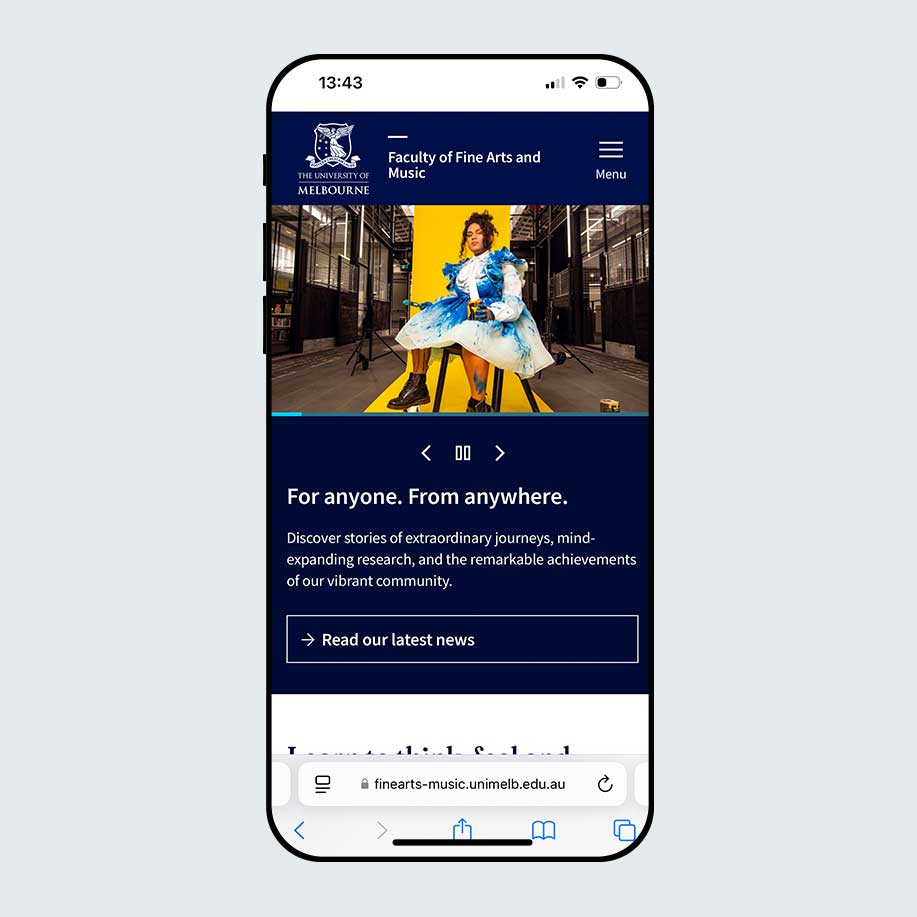
As the University of Melbourne formed the Faculty of Fine Arts and Music, bringing together the Victorian College of the Arts and the Melbourne Conservatorium of Music, I led a strategic design engagement to unify the Faculty’s digital presence.
The work focused on understanding the needs of students, staff, and partners during a period of organisational change, and translating those insights into a clear digital service journey and implementation roadmap. The outcome was a cohesive, user-centred direction to guide the redesign of five faculty websites under a unified brand.

Role
Strategic Design Lead
Organisation
Client
University of Melbourne, Faculty of Fine Arts and Music
Focus
Digital strategy, service design, merger transition
“Working with the team helped us make sense of a complex transition. They really got to the heart of what our students and staff needed, and helped us bring it all together in a way that actually felt like us.
–Project stakeholder
The challenge
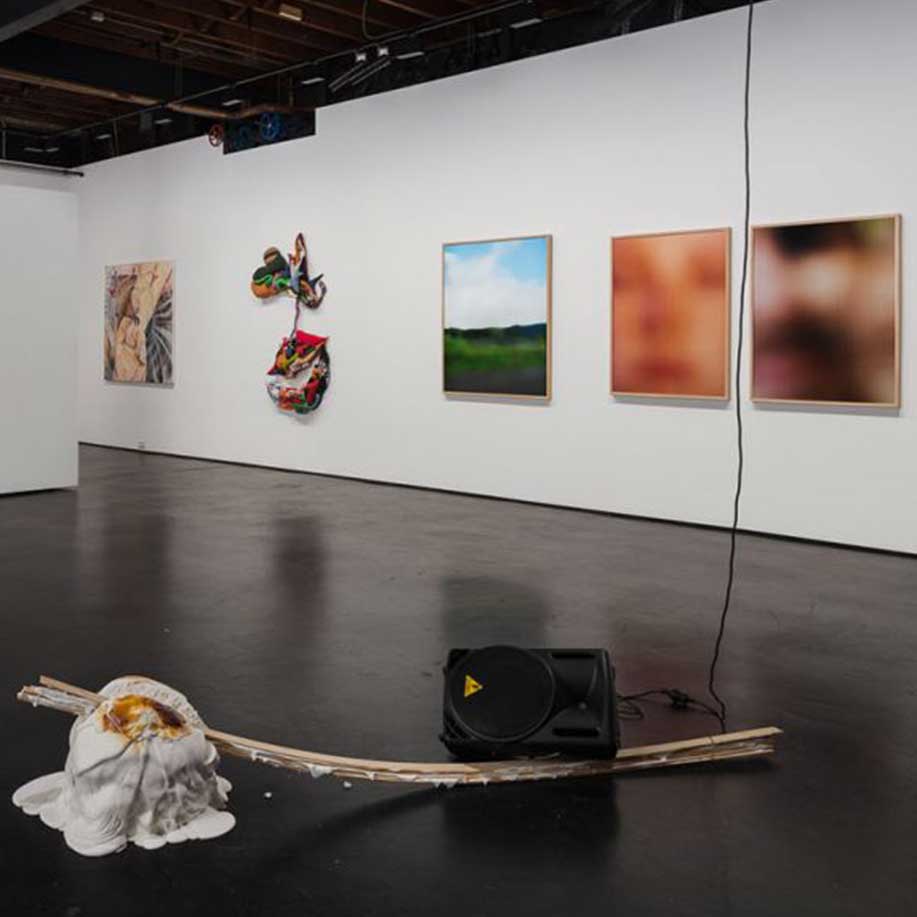
The creation of the Faculty of Fine Arts and Music represented a significant structural and cultural shift. While VCA and MCM each had strong identities, their digital experiences were fragmented across multiple websites, structures, and content models.
The challenge was to:
Support a smooth digital transition during a complex merger
Align faculty and university objectives while respecting distinct cohorts
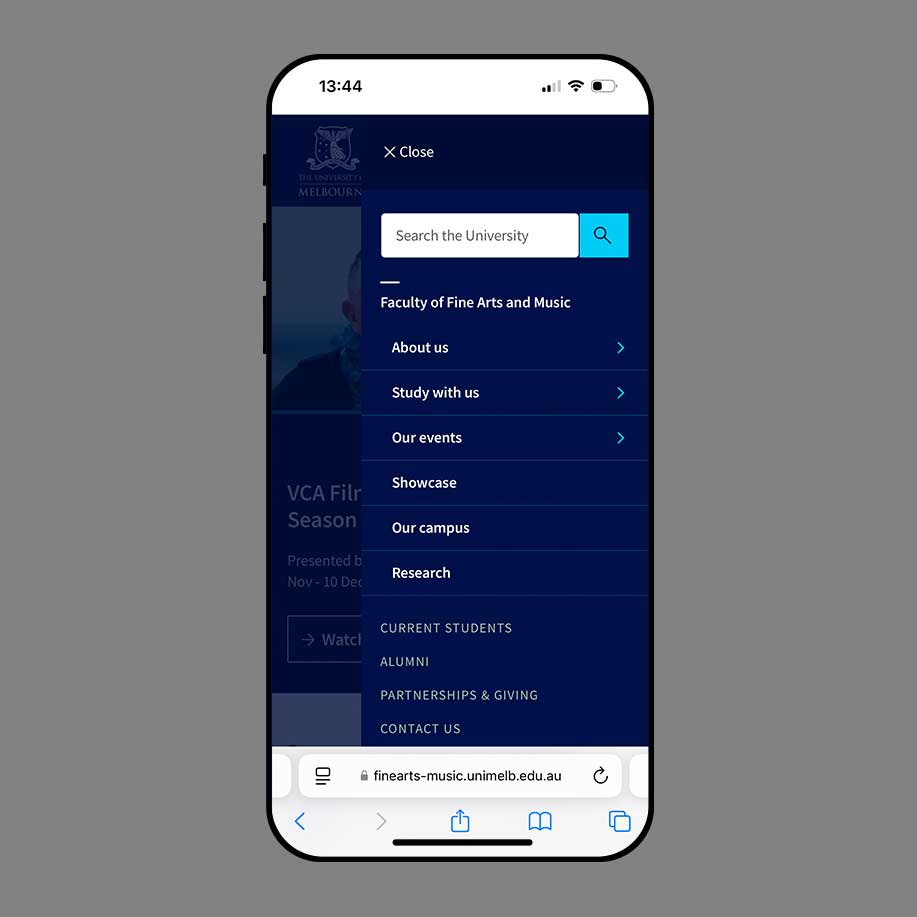
Unify five websites into a coherent, navigable ecosystem
Ensure the new digital experience reflected the Faculty’s value propositions
This required shared understanding, clarity of purpose, and service-level thinking.
Our research scope:
27 research participants
6 workshops
6 interviews
My role & responsibilities
As Strategic Design Lead, I:
Led discovery and strategy to support the Faculty’s digital transition
Partnered closely with faculty stakeholders across students, staff, and leadership
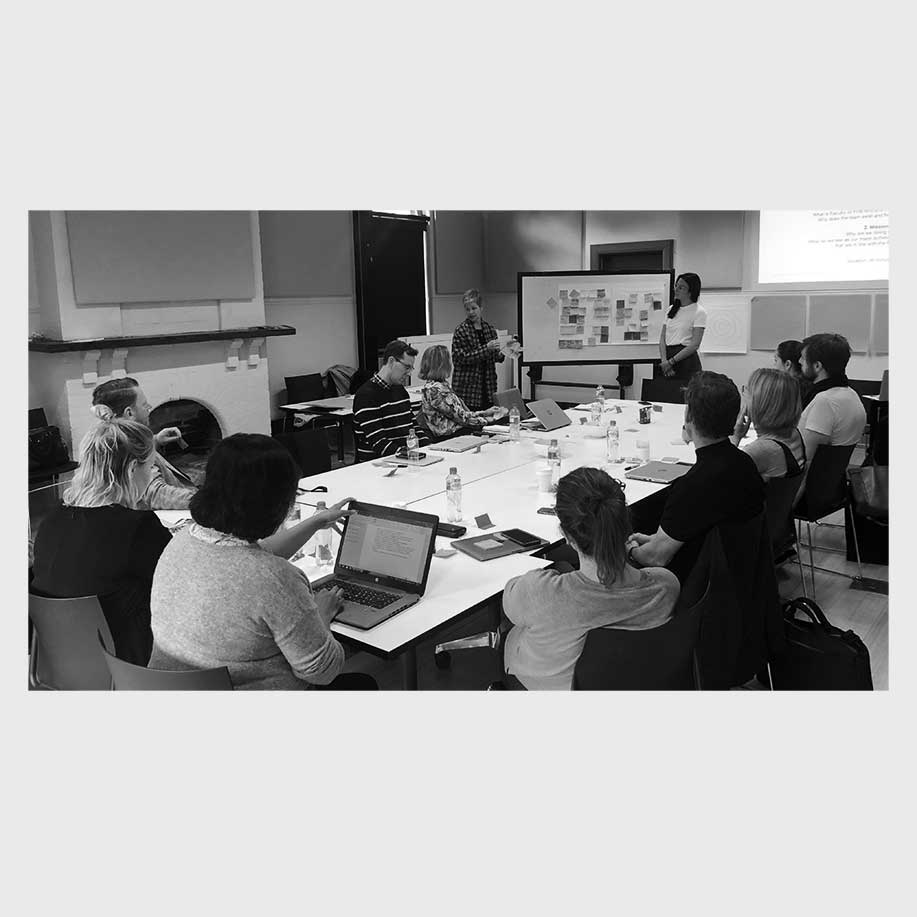
Facilitated interviews and workshops to surface needs, expectations, and risks
Translated insights into service journeys, IA direction, and delivery guidance
Embedded with teams to support adoption of human-centred design practices
Approach & thinking
The work was grounded in human-centred and strategic design, with a strong emphasis on alignment during change.
Key elements included:
Stakeholder interviews across key cohorts to understand needs and concerns
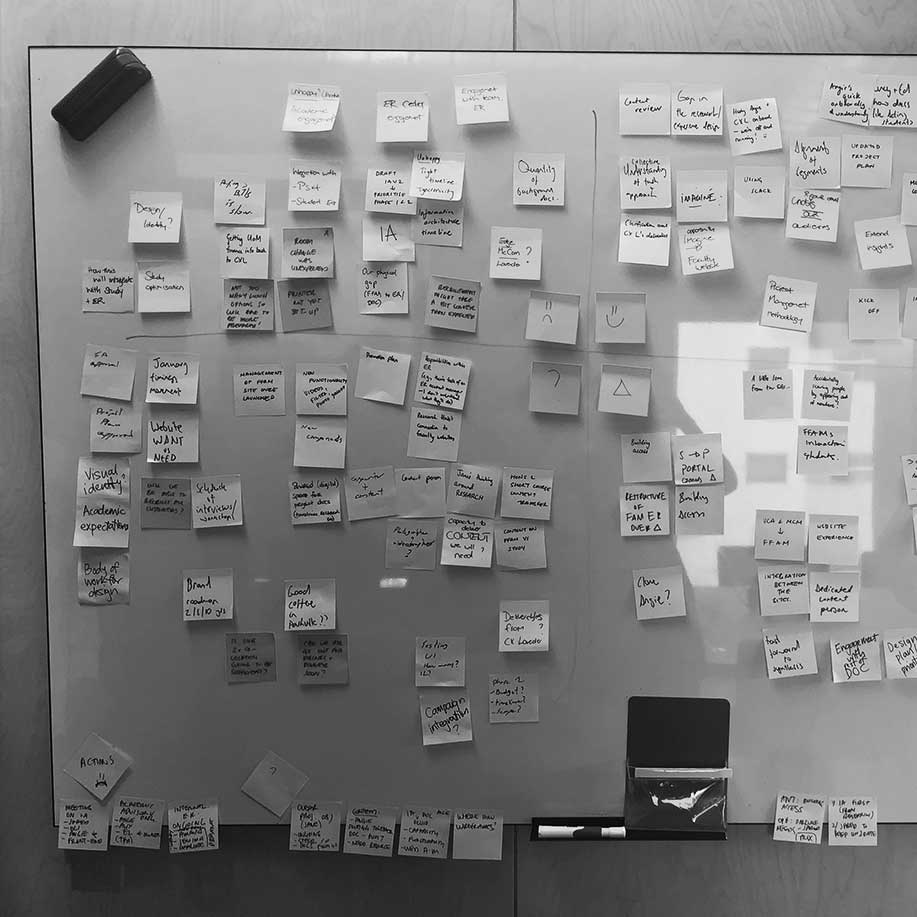
Scoping workshops to map current-state journeys and merger impacts
Assessment of how digital experiences could support identity, clarity, and continuity
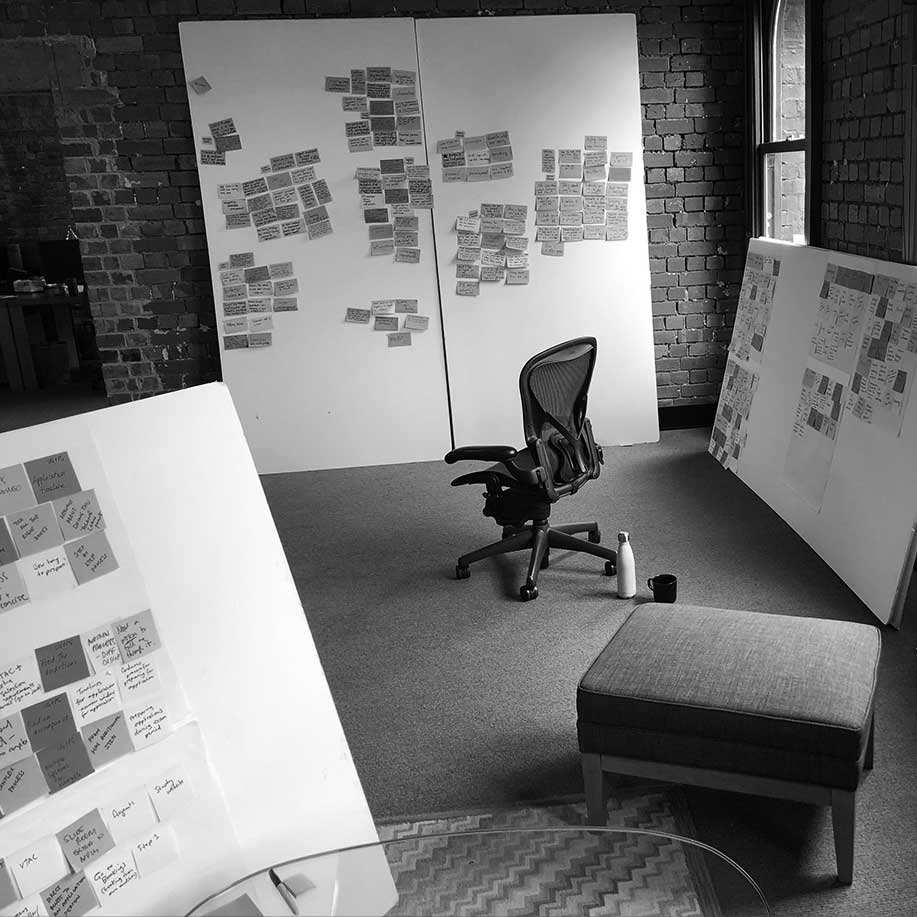
Service journey mapping to connect content, navigation, and user intent
Integration of journeys and insights directly into information architecture and content planning
By working closely with the Faculty on-site, the focus was on enabling confident decision-making.

Outcomes & impact
The engagement provided a clear foundation for delivery during a period of transition:
Defined a shared, user-centred digital service journey for the new Faculty
Provided a structured implementation roadmap to guide redesign across five websites
Clarified priorities and dependencies to support coordinated delivery
Delivered user stories, design patterns, and IA direction for implementation teams
Strengthened internal capability in human-centred and strategic design methods
Improved alignment between digital, content, and service planning efforts
“This project was about uniting people and stories.
–Project reflection